
Buyer Fit at a Glance
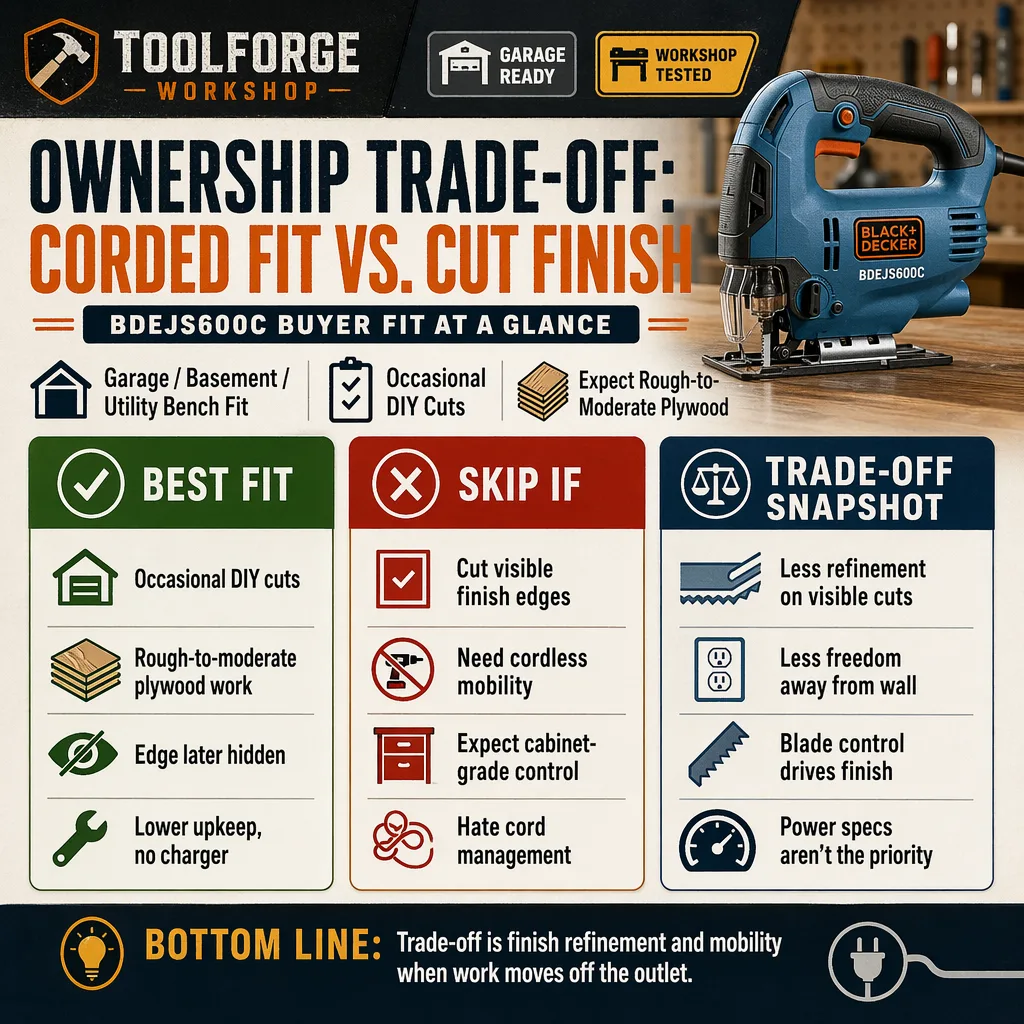
That simplicity is the point. It also creates the trade-off, because the saw gives up some refinement on visible cuts and some freedom when the work moves away from the wall. Most guides recommend the highest power number first, but that rule is wrong here, because blade control decides finish quality faster than motor bragging rights.
Best fit
- Occasional DIY cuts
- Rough to moderate plywood work
- Projects where the edge gets hidden later
- Buyers who want lower upkeep and no charger clutter
Skip it if
- You cut visible finish edges
- You want cordless mobility
- You already expect cabinet-grade control
- You hate cord management more than you hate battery charging
What We Evaluated It On
This analysis weighs the things that affect ownership, not just the catalog label. The real questions are line control, vibration, blade compatibility, and the upkeep that follows each project.
A jigsaw that needs constant correction costs attention every time it leaves the shelf. A tool that looks simple on the product page loses value fast if blade changes are awkward, the cord drags across the bench, or the cut line disappears under dust. That is where low-friction ownership matters more than headline performance.
The main checks here were practical:
- How the model fits a budget-first, corded, or cordless decision
- How much control it offers on visible versus hidden cuts
- What kind of upkeep it adds through blades, batteries, or cleanup
- Which nearby alternatives solve the same job with less annoyance
The First Filter for Jig Saw
Most guides tell shoppers to start with power. That is wrong for jig saws. The first filter is where the cut ends up, hidden inside framing or visible on the finished face.
Visible cuts punish vibration, shoe flex, and rushed feed far more than rough utility work does. Hidden cuts tolerate a simpler tool, which is why the BDEJS600C stays in the conversation for shelf cutouts, closet panels, and rough plywood work, while the Makita 4329K deserves more attention when the edge stays on display.
Compatibility sits right behind that. Blade shank type matters, and buyers should verify it before purchase instead of assuming every saw accepts the same replacement set. A cheap saw loses its value fast when the blades are awkward to source or the next tool in the shop uses a different system.
Best-fit decision box
- Choose corded budget if your cuts happen near an outlet and the edge gets hidden later.
- Choose cordless if the saw leaves the shop or rides with an existing battery platform.
- Choose a refined corded model if the cut line stays visible and vibration bothers you.
Where It Makes Sense
Shelf cutouts, closet panels, and small plywood trims
This is the cleanest case for the Black and Decker. A closet organizer notch, a shelf cutout, or a quick plywood trim does not demand premium control, so the BDEJS600C keeps the job simple.
The drawback shows up on longer curves and finish-sensitive edges. You need a better blade and a slower feed to keep the cut honest, and that extra attention is the price of buying at the budget end.
Portable remodel work and battery-platform ownership
The Dewalt fits jobs away from outlets and any shop already built around that battery system. It removes cord drag, which matters on ladders, in hallways, and in half-finished rooms where an extension cord becomes one more thing to trip over.
The trade-off is ownership burden. Batteries need charging, storage, and eventual replacement, and the extra pack weight rides with every cut. That burden disappears only when portability matters enough to justify it.
Cleaner cut lines on light plywood and trim
The Makita 4329K earns attention when line control matters more than portability. It belongs on work where the cut stays visible and the buyer wants a more controlled feel than a plain budget saw delivers.
The drawback is straightforward. It gives up the cordless freedom of the Dewalt and the cheapest buy-in of the Black and Decker, so it belongs on finish-leaning projects, not on the lowest-cost utility list.
Rough utility cuts on a tighter budget
The Porter Cable PCE345 fits the buyer who wants a jigsaw for rough tasks and does not want to spend on refinement. It belongs on scrap plywood, shop cleanup cuts, and non-cosmetic work.
Its trade-off is plainness. That shows up the moment you want a cleaner line, smoother tracking, or a saw that feels more composed through a curve.
Where It May Disappoint
The biggest disappointment starts with expectations. Buyers who shop by amp count or battery branding alone end up blaming the wrong part when a cut wanders.
The real causes are more basic:
- A coarse blade tears veneer and leaves ragged edges on plywood
- Fast feed pushes the blade off line on curves
- Weak shoe support makes visible cuts look rough
- Cord drag slows repositioning on compact benches
- Battery weight and charging routines add friction to cordless ownership
That is why the BDEJS600C makes sense for utility work but not for finish carpentry. It solves the low-friction part of the purchase, then asks the user to supply the finesse through blade choice and slower cutting.
A common mistake is treating orbital settings as a cure-all. They are not. Aggressive cutting helps on rough wood removal, then turns into extra tear-out when the goal is a clean edge.
How It Compares With Alternatives
A best jigsaw in 2025 review works only when it separates low-friction ownership from finish-first control. An “Our Top 6 Best Jigsaws for 2025” shortlist only matters when each saw earns a different job.
| Model | Power | Control | Vibration burden | Ownership burden | Best fit |
|---|---|---|---|---|---|
| Black and Decker BDEJS600C 5.0-Amp Jig Saw | Solid for light to moderate DIY | Basic | Moderate | Low | Occasional corded use near an outlet |
| Dewalt DCS331M1 Battery Powered Jig Saw | Strong for mobile work | Good for portable cuts | Moderate | High | Jobs away from power, battery-platform owners |
| Makita 4329K 3.9 Amp Jigsaw | Moderate | Best of this group for cleaner tracking | Lower | Low | Visible cuts and lighter finish work |
| Porter Cable PCE345 Jigsaw | Basic to moderate | Basic | Moderate | Low | Rough utility cuts and budget-first buyers |
Black and Decker BDEJS600C 5.0-Amp Jig Saw
This is the easiest corded recommendation for occasional use. It keeps the ownership burden low, and that matters more than a polished feature set when the saw only comes out for home repairs and small cuts.
Its weakness is the same thing that makes it easy to buy. It does not remove the need for a good blade or careful feed, and it gives less forgiveness than the Makita when the edge stays visible.
Dewalt DCS331M1 Battery Powered Jig Saw
This is the better fit for remodel jobs, exterior work, and any setup where cord drag gets in the way. It also makes sense for buyers already invested in the same battery platform, because that keeps the tool from becoming an isolated charger orphan.
The drawback is permanent ownership friction. Batteries add cost, charging routines, and pack weight, so the convenience benefit only pays off when the tool moves often.
Makita 4329K 3.9 Amp Jigsaw
This is the cleaner-feeling corded alternative in the group. It belongs on trim, light plywood, and other cuts where a steadier line matters more than the lowest price.
The trade-off is simple. It gives up the portability of the Dewalt and the budget-first appeal of the Black and Decker, so it earns its place only when cut quality matters enough to justify the extra spend.
Porter Cable PCE345 Jigsaw
This is the value play for rough work. It fits buyers who need a usable jigsaw, not a refined one, and who want to keep the purchase narrow and practical.
The drawback is the plain feature set. If the cut line matters, the Makita beats it. If portability matters, the Dewalt beats it. That leaves the Porter Cable as the rough-task fallback.
Decision Checklist
Use this before you buy:
- Most of my cuts happen near an outlet
- The finished edge stays hidden or gets covered later
- I want lower upkeep than a cordless battery system adds
- I already own or plan to buy quality blades
- I checked blade compatibility before shopping
- I care more about simple ownership than premium cut feel
If most of those boxes are checked, the BDEJS600C fits. If visible cuts or portability drive the purchase, move the Makita 4329K or Dewalt DCS331M1 higher on the list.
Bottom Line
The Black and Decker BDEJS600C is the right buy for occasional users who want a straightforward corded jig saw and do not want battery management on the checklist. It keeps the purchase simple, the upkeep light, and the decision easy.
Skip it if the cut line stays visible, the work moves around the house, or the project depends on cleaner curves. In those cases, the Makita 4329K gives better control, and the Dewalt DCS331M1 solves mobility at the cost of battery burden. The Porter Cable PCE345 sits only at the budget edge, where rough utility beats refinement.
FAQ
Is the Black and Decker BDEJS600C good for beginners?
Yes, for beginners who want a simple corded saw for occasional cuts and rough curves. It is not the right first buy for finish carpentry, because blade choice and feed rate matter more than the motor label.
Should I choose corded or cordless first?
Choose corded first if the saw stays near a bench and low ownership burden matters. Choose cordless first if the tool moves room to room or already fits an existing battery platform.
Why do jig saw cuts wander on plywood?
Cuts wander when the blade flexes, the blade is dull or wrong for the material, or the feed rate gets too aggressive. A finer blade and slower pressure fix more of the problem than chasing a bigger motor.
Which of these is best for cleaner visible cuts?
The Makita 4329K belongs at the top of that list. The BDEJS600C and Porter Cable PCE345 fit rougher work, while the Dewalt DCS331M1 makes more sense for portability than for the cleanest edge.
What is the most common buying mistake?
Buying on power alone is the most common mistake. Blade compatibility, vibration, and the burden of batteries or cord management shape the ownership experience more than the headline number on the box.